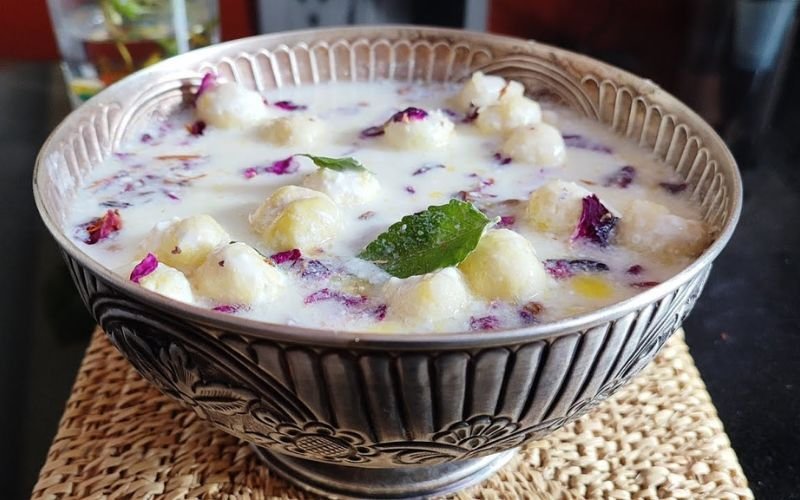
Charnamrit (also known as Panchamrit or Charanamrit) is a sacred, nectar-like offering in Hindu rituals, especially during poojas, Janmashtami, Navratri, Shivratri, or abhishek ceremonies. This divine prasad is believed to purify the body and mind, symbolizing the five elements (panch tatva) and offering blessings of health, prosperity, and spiritual strength. Made with just five simple, sattvic ingredients—milk, curd, ghee, honey, and mishri (or sugar)—it’s incredibly easy to prepare at home and captures the authentic taste served in temples.
Whether you’re making it for a family puja or as a nourishing drink, this charnamrit recipe is beginner-friendly, quick (ready in under 10 minutes), and healthier than store-bought versions—no preservatives or artificial additives. In this step-by-step guide, we’ll show you how to make homemade charnamrit that tastes just like temple prasad. Let’s get started!
Cook Info: Charnamrit recipe
| Detail | Value |
|---|---|
| Prep Time | 5 minutes |
| Cook Time | 0 minutes |
| Total Time | 5 minutes |
| Servings | 4 (about 1 cup each) |
| Calories per Serving | ~150–200 kcal |
| Difficulty | Very Easy |
| Cuisine | Indian (Sattvic/Puja Prasad) |
Ingredients (Serves 4)
For the Base Charnamrit
- 2 cups (500 ml) fresh cow’s milk (preferably raw or full-fat, chilled)
- ½ cup (125 g) fresh curd/dahi (yogurt, homemade or full-fat for creaminess)
- 2 tablespoons pure cow’s ghee (clarified butter)
- 3–4 tablespoons honey (or to taste; use raw, organic for authenticity)
- 4–5 tablespoons mishri (rock sugar/candy sugar) or powdered sugar/jaggery (adjust sweetness)
Optional Add-Ins for Enhanced Flavor & Tradition
- 10–12 fresh tulsi (holy basil) leaves (crushed lightly for aroma)
- 1 teaspoon Ganga Jal (holy water) – if available, for spiritual purity
- A pinch of cardamom powder (elaichi) – for mild fragrance
- 1–2 tablespoons chopped dry fruits (almonds, cashews, chironji) – for richness
Nutrition Estimate per Serving (approximate, based on standard values)
| Nutrient | Amount per Serving |
|---|---|
| Calories | 180 kcal |
| Protein | 5 g |
| Carbohydrates | 22 g |
| Fat | 8 g |
| Sugar | 18 g (natural from honey/mishri) |
| Calcium | 150 mg |
| Vitamin C | 2 mg |
(Note: Values vary based on exact ingredients; use full-fat dairy for traditional richness.)
Step-by-Step Instructions
- Prepare the Bowl: Use a clean silver, steel, or glass bowl (silver is traditional as it enhances purity and cooling properties). Avoid plastic.
- Add Ghee First: Spoon in 2 tablespoons of pure cow’s ghee. This represents prosperity and is the base element.
- Add Honey: Pour in 3–4 tablespoons of honey. Stir gently with a clean spoon to combine with ghee. Honey symbolizes health and sweetness of life.
- Incorporate Mishri: Add 4–5 tablespoons of mishri (or powdered sugar/jaggery). Mix until it starts dissolving slightly. Mishri adds happiness and purity.
- Add Curd: Gently stir in ½ cup fresh curd. Blend smoothly to avoid lumps. Curd represents strength and cooling energy.
- Pour Milk: Add 2 cups chilled cow’s milk. Stir continuously in a clockwise direction (traditional way for positive energy).
- Add Tulsi & Others: Crush 10–12 tulsi leaves lightly and add them. If using Ganga Jal, add 1 teaspoon now. Sprinkle a pinch of cardamom powder and chopped dry fruits for extra flavor.
- Final Mix & Bless: Stir everything well for 1–2 minutes until fully combined. Taste and adjust sweetness if needed (keep it mildly sweet for prasad).
Your homemade charnamrit is ready! Offer it to the deity during puja, then distribute as prasad.
Cooking Tips
- Use raw cow’s milk for authentic taste and sattvic qualities (boiled milk can be used if raw is unavailable).
- Always add ingredients in sequence (ghee → honey → mishri → curd → milk) as per tradition for symbolic and energetic benefits.
- Stir clockwise to invite positive energy.
- Keep all utensils clean and pure (no tasting during preparation for prasad).
- For colder weather, use room-temperature milk; in summer, chill it for a refreshing prasad.
- Avoid metal spoons if possible; use wooden or silver for purity.
- Make fresh each time—panchamrit is best consumed immediately.
- If honey crystallizes, warm it slightly in hot water (not directly on fire).
Serving Ideas
- Serve as prasad after puja or abhishek.
- Enjoy chilled in summer as a cooling drink.
- Pair with fruits or halwa for a complete bhog.
- Offer in small cups to guests during festivals like Janmashtami or Navratri.
- Use as a base for Panchamrit sweets (mix with fruits for dessert).
- Give to kids as a healthy, immunity-boosting treat.
- Serve in silver bowls for traditional look.
Storage & Reheating Tips
- Refrigerate: Store in an airtight glass container for up to 24 hours (best fresh).
- Freezer: Not recommended (curd and milk separate).
- Reheating: Serve cold or at room temperature—do not heat (it loses sattvic qualities).
- Best Practice: Prepare only what you need; leftovers can be consumed within a day as a drink.
- Tip: If it thickens in fridge, add a splash of fresh milk and stir.
Variations & Substitutes
| Original Ingredient | Variation/Substitute | Why It Works |
|---|---|---|
| Cow’s Milk | Almond milk or coconut milk | Vegan option; lighter texture |
| Curd | Vegan yogurt (coconut/almond-based) | Dairy-free for vegan prasad |
| Honey | Maple syrup or date syrup | Vegan alternative; similar sweetness |
| Ghee | Coconut oil | Vegan; maintains richness |
| Mishri/Sugar | Jaggery powder | Natural, iron-rich sweetener |
| Tulsi Leaves | Omit or use mint leaves | For non-religious versions |
| Dry Fruits | Skip for plain version | Simpler for kids or fasting |
Healthier Options & Nutrition Charnamrit is naturally sattvic and nourishing:
- High in calcium and protein from milk/curd.
- Antioxidants from honey and tulsi.
- Healthy fats from ghee for energy.
- Use raw honey and full-fat dairy for maximum benefits.
- Low-sodium, gluten-free by nature.
- For diabetics: Reduce mishri/honey and use stevia (consult doctor).
Expert Notes
- As a home cook specializing in traditional Indian prasad, I recommend using unpasteurized cow’s milk for authentic taste.
- The sequence (ghee first) follows Ayurvedic principles for balancing doshas.
- Tulsi adds medicinal value (immunity boost).
- Avoid tasting while preparing for puja—offer first.
- Inspired by temple recipes from North India (Uttar Pradesh/Rajasthan style).
- Variations differ regionally (South India adds banana; Kerala uses coconut water).
- Always use fresh, pure ingredients for spiritual benefits.
Frequently Asked Questions (FAQs)
1. What is Charnamrit and why is it offered in puja?
Charnamrit (or Panchamrit) is a sacred nectar made from five ingredients symbolizing the five elements. It’s offered to deities during abhishek and distributed as prasad for blessings, health, and purity.
2. Can I make charnamrit vegan?
Yes! Use almond/coconut milk, vegan yogurt, coconut oil instead of ghee, and maple syrup instead of honey. It maintains the essence while being plant-based.
3. How long can I store homemade charnamrit?
Store in the fridge for up to 24 hours in a glass container. It’s best fresh—consume within the day for maximum spiritual and nutritional benefits.
4. Is charnamrit healthy?
Yes, it’s rich in calcium, protein, and antioxidants. Tulsi boosts immunity, honey provides natural energy, and ghee aids digestion. Consume in moderation due to natural sugars.
5. Can I use sugar instead of mishri?
Yes, powdered sugar or jaggery works, but mishri is traditional for purity and cooling effect. Avoid refined white sugar for a more sattvic version.
6. Why add tulsi leaves?
Tulsi (holy basil) adds divine aroma and medicinal benefits (anti-inflammatory, stress relief). It’s a must in authentic temple-style charnamrit.
7. What if I don’t have Ganga Jal?
It’s optional for spiritual purposes. Use clean drinking water or skip it—the recipe still tastes great.
8. Can kids and pregnant women drink charnamrit?
Yes, it’s nourishing and safe in small amounts (consult doctor for pregnancy). It’s often given to children as a healthy prasad.
Conclusion This easy homemade charnamrit recipe brings the divine taste of temple prasad to your kitchen—simple, pure, and full of blessings. Whether for Janmashtami, Navratri, or daily devotion, it’s a quick way to connect spiritually while nourishing your body. Try it today, share your experience in the comments, and don’t forget to rate it! Pin this on Pinterest for later or tag us on Instagram with your photos. Happy cooking and blessed puja!
Affiliate Disclaimer: Some ingredient links may be affiliate links—we earn a small commission at no extra cost to you.
If you are a food lover, visit our blog website therecipetaste.com.