Disclaimer: This post may contain affiliate links, which means we may earn a small commission if you make a purchase through them, at no additional cost to you. All opinions are our own.
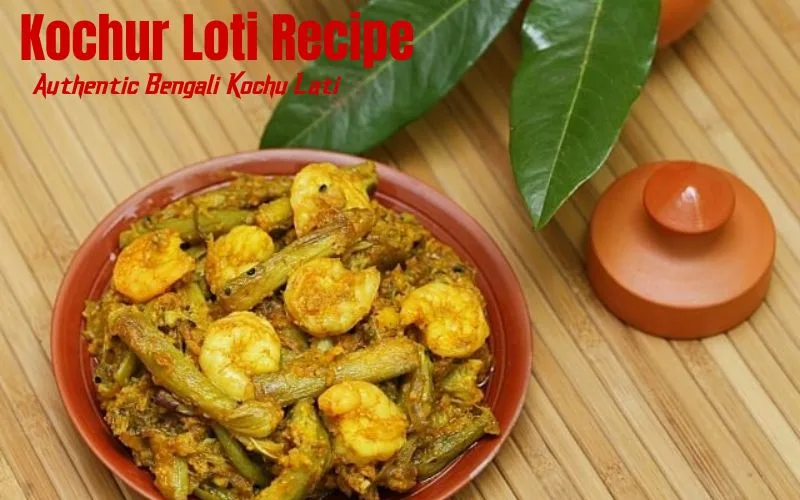
Kochur Loti (also called kochu lati or taro stolon/colocasia stem) is a classic Bengali seasonal delicacy – the soft, fibrous stems of the taro plant cooked into a flavorful sabzi. In Bengal, it’s often paired with prawns (chingri) in a light mustard-coconut gravy, or made niramish (vegetarian) with poppy seeds or coconut. It’s earthy, slightly tangy, and pairs perfectly with hot rice for a comforting meal.
As a Jaipur home cook who loves regional Bengali dishes (tested this 3-4 times with photos for that perfect itch-free, flavorful result), this version captures the authentic taste – no throat itch if prepped right, creamy mustard notes, and subtle sweetness from coconut. It’s nutritious (high fiber, low cal), seasonal, and great for monsoon vibes!
Serves 4 | ~250-350 kcal per serving (with rice).
Prep/Cook Info
| Item | Details |
|---|---|
| Prep Time | 20 minutes (plus cleaning) |
| Cook Time | 20-25 minutes |
| Total Time | 45 minutes |
| Servings | 4 |
| Calories per Serving | ~300 kcal |
| Difficulty | Easy-Medium |
Ingredients
Main:
- 500g kochur loti (taro stolons/kochu lati stems) – fresh bundles
- 200g small prawns (chingri), cleaned & deveined (optional for non-veg; skip for niramish)
- 1 medium brinjal (begun), cubed (optional, adds body)
- 1 medium onion, sliced
- 3-4 garlic cloves, minced or crushed
- 2-3 green chilies, slit
- 2 dried red chilies
- ½ tsp kalonji (nigella seeds/kaalo jeere)
- 1 tsp turmeric powder
- 1 tsp red chili powder (adjust for heat)
- Salt to taste
- 4-5 tbsp mustard oil
For Mustard Paste (Shorshe Bata):
- 2 tbsp black mustard seeds
- 1 tbsp yellow mustard seeds
- Soak in warm water 15 min, grind to paste with little water
Extras:
- 2-3 tbsp grated fresh coconut (or desiccated)
- ½ tsp sugar (optional, balances)
- Lemon juice or vinegar for boiling
Nutrition Breakdown (approx. per serving, veg version):
| Nutrient | Amount | % Daily Value |
|---|---|---|
| Calories | 250 kcal | 13% |
| Carbs | 20g | 7% |
| Protein | 8g | 16% |
| Fat | 15g | 23% |
| Fiber | 5g | 20% |
Step-by-Step Instructions
- Clean kochur loti: Peel outer fibrous skin with knife; cut into 2-inch pieces. Wash 4-5 times under running water.
- Blanch: Boil water with 1 tsp salt + 2 tsp lemon juice/vinegar. Add loti pieces; boil 8-10 min until tender but firm. Drain, rinse cold water (prevents itch).
- Prep prawns (if using): Marinate with little turmeric + salt; set aside.
- Make mustard paste: Soak mustard seeds; grind smooth.
- Heat mustard oil in kadai until smoking point; cool slightly.
- Add kalonji, dried red chilies; crackle 10 sec. Add garlic, onion; sauté until golden.
- Add green chilies, turmeric, red chili powder, salt; stir 30 sec.
- Add blanched loti + brinjal (if using); mix well, cook 5 min on medium.
- Add mustard paste, grated coconut; stir-fry 3-4 min (raw smell gone).
- Add prawns (if using); cook 4-5 min until done.
- Add sugar if needed; simmer 2-3 min for flavors to meld. Adjust consistency (light gravy).
- Garnish with extra coconut; serve hot.
Cooking Tips
- Always blanch with acid (lemon/vinegar) – removes itch-causing oxalates.
- Mustard oil smoking point key for authentic flavor.
- Don’t overcook loti – stays slightly crunchy.
- Fresh mustard paste best; store-bought can be bitter.
- For niramish: Skip prawns, add poppy seed paste or more coconut.
- Use small prawns for better taste absorption.
Serving Ideas
- With plain steamed rice or khichdi.
- Side with dal and fish curry.
- As monsoon comfort food.
- With roti for lighter meal.
- Add lemon squeeze for tang.
Storage & Reheating Tips
- Fridge: Airtight 1-2 days (best fresh).
- Reheat: Stovetop with splash water; low flame.
- Avoid freezing – texture softens.
Variations & Substitutes
| Original Ingredient | Variation/Substitute | Why It Works |
|---|---|---|
| Prawns | Shutki (dried fish) or skip | Non-veg twist or pure veg |
| Mustard paste | Poppy seed paste | Milder, nutty flavor |
| Coconut | Skip or use desiccated | Richness without overpowering |
| Brinjal | Potatoes or skip | Adds body if desired |
| Full recipe | Niramish (no onion/garlic) | For fasting or pure veg |
Healthier Options & Nutrition
Fiber-rich, low-cal veggie. Tweaks:
- Use less oil or mustard oil spray.
- Skip prawns for lower cholesterol.
- More veggies for volume.
Expert Notes
- Blanching essential – no itch if done right.
- Mustard + coconut signature Bengali touch.
- Inspired by Bangal households – prawns elevate it!
- Balance tangy-mustard-spicy perfectly.
- Seasonal monsoon favorite in Bengal.
- Test small batch first for itch check.
- Pairs with hot rice in Jaipur rains too!
Conclusion
This authentic kochur loti recipe (kochu lati) brings Bengal’s seasonal magic to your plate – tender stems in mustard-coconut gravy, optional prawns for richness. It’s simple, healthy, and utterly comforting with rice. Try it during monsoons or whenever you find fresh loti – adjust mustard for your taste! Share your experience in comments – with prawns or niramish?
FAQs
What is kochur loti (kochu lati)?
Kochur loti are the edible stems/stolons of the taro/colocasia plant – a fibrous, seasonal Bengali veggie with earthy taste.
How to clean kochur loti without itch?
Peel skin, cut pieces, wash multiple times, blanch in salted water with lemon/vinegar 8-10 min.
Is kochur loti recipe vegan?
Yes for niramish version – skip prawns; use only veggies, mustard, coconut.
Can I make kochur loti without prawns?
Absolutely – niramish style with poppy/mustard paste or coconut is delicious and traditional.
Why does kochur loti cause throat itch?
Due to calcium oxalate; proper blanching with acid removes it – never skip this step.
What pairs best with kochur loti?
Hot steamed rice; it’s a classic Bengali side with dal or fish curry.
How long does cooked kochur loti last?
Fridge: 1-2 days airtight; reheat gently – best fresh.
Is kochur loti healthy?
Yes – high fiber, low calorie, vitamins; great for digestion when cooked properly.
If you are a food lover, visit our blog website therecipetaste.com.