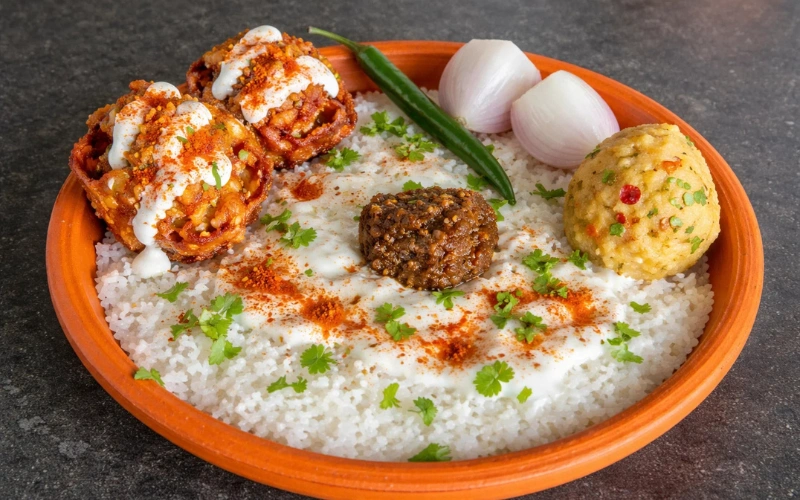

This easy recipe transforms simple leftover cooked rice into a fermented delight by soaking it overnight in water, creating a probiotic-rich meal that’s perfect for hot summer days. Known for its cooling properties, panta bhat aids digestion, boosts gut health, and provides a refreshing, hydrating experience without any fancy ingredients. Originating from rural households as a sustainable way to use leftovers, this homemade panta bhat recipe is not just economical but also packed with enhanced nutrients like vitamins, minerals, and beneficial bacteria from natural fermentation. Whether you’re celebrating Pohela Boishakh or seeking a light breakfast, the panta bhat recipe stands out for its simplicity and health benefits.
Prep Time: 10 minutes | Cook Time: 20 minutes (for rice) | Fermentation Time: 8-12 hours | Total Time: 8-12 hours 30 minutes | Servings: 4
Ingredients for Panta Bhat Recipe
| Ingredient | Measurement | Notes |
|---|---|---|
| Cooked rice (leftover or freshly cooked) | 2 cups | Use short-grain or parboiled rice for best fermentation |
| Water (room temperature) | 4 cups | Filtered or boiled for hygiene |
| Boiled potatoes | 2 medium | Optional, for mashing into the rice |
| Green chilies | 4-5 | Fresh, for spice |
| Onion | 1 medium | Thinly sliced, raw |
| Lemon (or Gondhoraj lebu if available) | 1 large | For squeezing fresh juice |
| Salt | To taste | Enhances flavors |
| Mustard oil (optional) | 1 tablespoon | For drizzling, adds pungency |
| Dried red chilies (optional) | 2-3 | For frying as garnish |
| Fresh coconut slices (optional) | 1/4 cup | For added texture and mild sweetness |
Step-by-Step Instructions for Panta Bhat Recipe
- Prepare the Rice: If using fresh rice, wash 1 cup uncooked rice and cook it in 3 cups water until soft (about 20 minutes). For leftovers, ensure the rice is at room temperature. This base is crucial for a good panta bhat recipe.
- Cool and Soak: Place the cooked rice in a large bowl. Add 4 cups of room-temperature water, ensuring the water level is about 2 cm above the rice. Gently break up any lumps with your hands. Cover loosely and let it ferment in a cool, dark place for 8-12 hours overnight. The fermentation gives the panta bhat its signature tang.
- Mash and Season: After fermentation, squeeze out excess water from a portion of rice if desired, but retain some for serving. Mash in boiled potatoes for creaminess. Add salt to taste, crushed green chilies, sliced onions, and a squeeze of lemon juice. Drizzle with mustard oil if using.
- Garnish and Serve: Fry dried red chilies lightly if including. Garnish with coconut slices, more onions, and chilies. Mix well and serve chilled or at room temperature.
Cooking Tips for Perfect Panta Bhat
- Use clean, filtered water to avoid spoilage during fermentation.
- Ferment in an earthen pot for better temperature regulation and authentic taste.
- Check for a mild sour aroma after 8 hours; if too sour, reduce time next batch.
- For beginners, start with 8 hours in warmer climates to prevent over-fermentation.
- Always wash hands before handling to maintain hygiene.
Serving Ideas
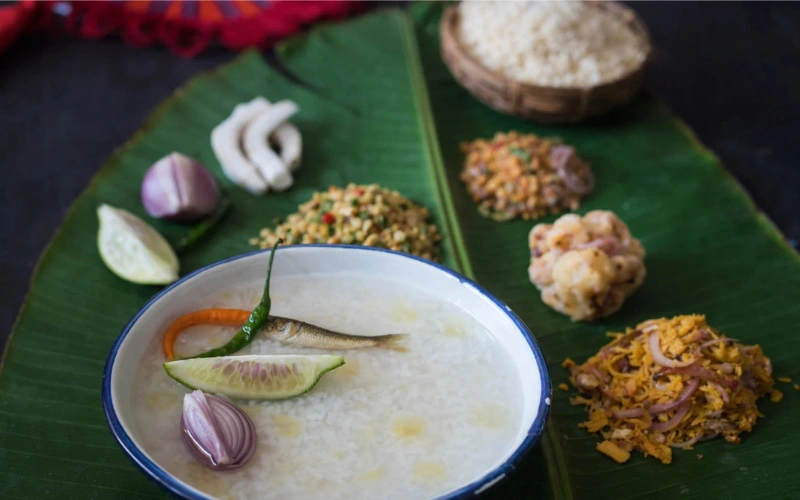
Elevate your panta bhat recipe by serving it with traditional sides for a complete meal. Pair it with fried fish (machh bhaja), mashed eggplant (begun bhorta), or lentil fritters (dal’er bora) for protein. Add raw mango slices or pickled vegetables for tang. It’s ideal as a light breakfast or lunch, especially in summer, providing hydration and satisfaction. Serve in individual bowls with a ladle of the fermented water for extra probiotics.
Storage Tips
Store leftover panta bhat in a covered container in the refrigerator for up to 24 hours. Beyond that, it may over-ferment and spoil. Stir well before eating, and avoid reheating as it kills beneficial bacteria. For best results, prepare fresh batches of this easy panta bhat recipe.
Variations of Panta Bhat Recipe
- Assamese Poita Bhat: Add mustard oil and green chilies for a pungent kick.
- Odia Pakhala Bhat: Include sun-dried lentil dumplings (badi chura) and raw mango.
- Spicy Version: Increase green chilies and add ginger for heat.
- Veggie-Loaded: Mix in grated carrots or cucumber for freshness.
| Variation | Key Addition | Flavor Profile |
|---|---|---|
| Classic Bengali | Onions, lemon | Tangy and refreshing |
| Assamese | Mustard oil | Pungent and spicy |
| Odia | Raw mango, badi | Sour and crunchy |
| Veggie | Carrots, cucumber | Light and nutritious |
Substitutes for Ingredients
- Rice: Use any leftover grain like quinoa for a modern twist (though not traditional).
- Lemon: Lime or vinegar for acidity.
- Mustard oil: Olive oil or skip for a milder version.
- Potatoes: Sweet potatoes for a subtle sweetness.
Health Options and Benefits
The panta bhat recipe is a health powerhouse due to fermentation. It promotes gut health with probiotics like lactic acid bacteria, aiding digestion and immunity. Fermentation increases bioavailability of nutrients, making it richer in B-vitamins, iron, zinc, and calcium compared to plain rice. It’s low in calories, hydrating, and has a lower glycemic index for blood sugar control. For health-focused options, reduce salt for low-sodium diets or add veggies for fiber. It’s vegan, gluten-free, and supports weight management with its filling yet light nature. Enjoy this easy recipe for natural wellness.
Nutritional Information
| Nutrient | Amount per Serving | % Daily Value (approx.) |
|---|---|---|
| Calories | 200 kcal | 10% |
| Carbohydrates | 45g | 15% |
| Protein | 4g | 8% |
| Fat | 1g | 1% |
| Fiber | 1g | 4% |
| Iron | 2-3mg (enhanced) | 15% |
| Calcium | 20-30mg (enhanced) | 2-3% |
| Vitamin B (thiamine, etc.) | Variable, increased | – |
| Probiotics | High (from fermentation) | – |
Expert Notes
Experts note that the panta bhat recipe’s fermentation relies on beneficial bacteria, but hygiene is key to avoid harmful microbes. Use earthen pots for optimal results, as they allow mild aeration. In Ayurvedic traditions, it’s considered a “cold food” for balancing body heat. For authenticity, source Gondhoraj lemon if possible—it elevates the flavor. This step-by-step guide draws from traditional Bengali practices, ensuring your homemade version is both nutritious and culturally rich.
Conclusion
Panta Bhat Recipe is a beautiful testament to the wisdom of traditional Indian cuisine—simple, sustainable, and incredibly nourishing. This easy homemade fermented rice dish not only transforms humble leftovers into a probiotic-rich meal but also offers a refreshing, cooling experience that’s perfect for hot days or as a light, digestive-friendly option any time of year. With its beginner-friendly preparation, minimal ingredients, and endless variations, anyone can master this step-by-step guide to create an authentic panta bhat recipe at home. Whether enjoyed during festivals, as a everyday breakfast, or simply to embrace zero-waste cooking, it delivers exceptional health benefits alongside delightful tangy flavors.
Read Also:
Donna Kelce Cookie Recipe: Easy Homemade Chocolate Chip Delight
Vallarai Keerai Recipe: Easy & Healthy Brahmi Greens Stir-Fry
Frequently Asked Questions (FAQs)
What is panta bhat and why is it fermented?
Panta bhat is a traditional fermented rice dish from Bengal and nearby regions, made by soaking cooked rice in water overnight. Fermentation introduces probiotics, enhancing digestion, nutrient absorption, and gut health, making it a natural coolant for summers.
Can I make panta bhat recipe without leftover rice?
Yes, you can cook fresh rice for your homemade panta bhat recipe. Just ensure it’s soft and cooled completely before soaking. Leftovers work best for sustainability, but fresh rice yields similar results with the step-by-step guide.
Is panta bhat recipe healthy for daily consumption?
Absolutely, in moderation. It boosts immunity, aids weight management, and provides enhanced vitamins and minerals. However, those with gut sensitivities should start small, as fermentation can be potent. It’s low-calorie and probiotic-rich.
How do I know if my panta bhat has spoiled?
Check for a foul odor, excessive sourness, or discoloration after fermentation. If it smells mildly tangy like yogurt, it’s good. Store properly and consume within 24 hours for the safest easy panta bhat recipe experience.
Can kids or diabetics enjoy this panta bhat recipe?
Yes, kids love its mild flavors—reduce spices for them. For diabetics, the lower glycemic index from fermentation helps blood sugar control, but monitor portions. It’s beginner-friendly and nutritious for all ages.
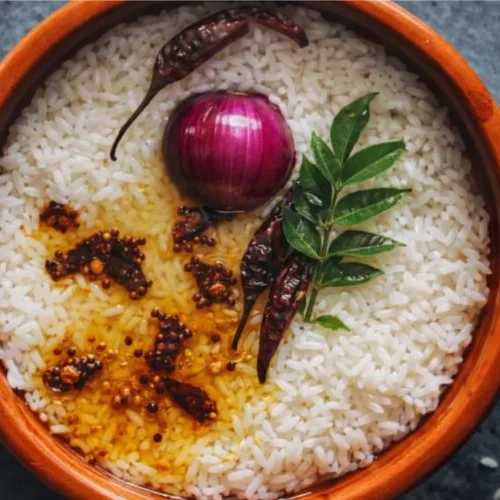
Panta Bhat Recipe
Equipment
- Large bowl or earthen pot
- Strainer or colander
- Cooking pot
- Spoon or ladle
- Knife and Cutting Board
- Mortar and pestle (optional)
Ingredients
- Cooked rice leftover or freshly cooked
- Water room temperature
- Boiled potatoes
- Green chilies
- Onion
- Lemon or Gondhoraj lebu if available
- Salt
- Mustard oil optional
- Dried red chilies optional
- Fresh coconut slices optional
Instructions
- Prepare the Rice: If using fresh rice, wash 1 cup uncooked rice and cook it in 3 cups water until soft (about 20 minutes). For leftovers, ensure the rice is at room temperature. This base is crucial for a good panta bhat recipe.
- Cool and Soak: Place the cooked rice in a large bowl. Add 4 cups of room-temperature water, ensuring the water level is about 2 cm above the rice. Gently break up any lumps with your hands. Cover loosely and let it ferment in a cool, dark place for 8-12 hours overnight. The fermentation gives the panta bhat its signature tang.
- Mash and Season: After fermentation, squeeze out excess water from a portion of rice if desired, but retain some for serving. Mash in boiled potatoes for creaminess. Add salt to taste, crushed green chilies, sliced onions, and a squeeze of lemon juice. Drizzle with mustard oil if using.
- Garnish and Serve: Fry dried red chilies lightly if including. Garnish with coconut slices, more onions, and chilies. Mix well and serve chilled or at room temperature.