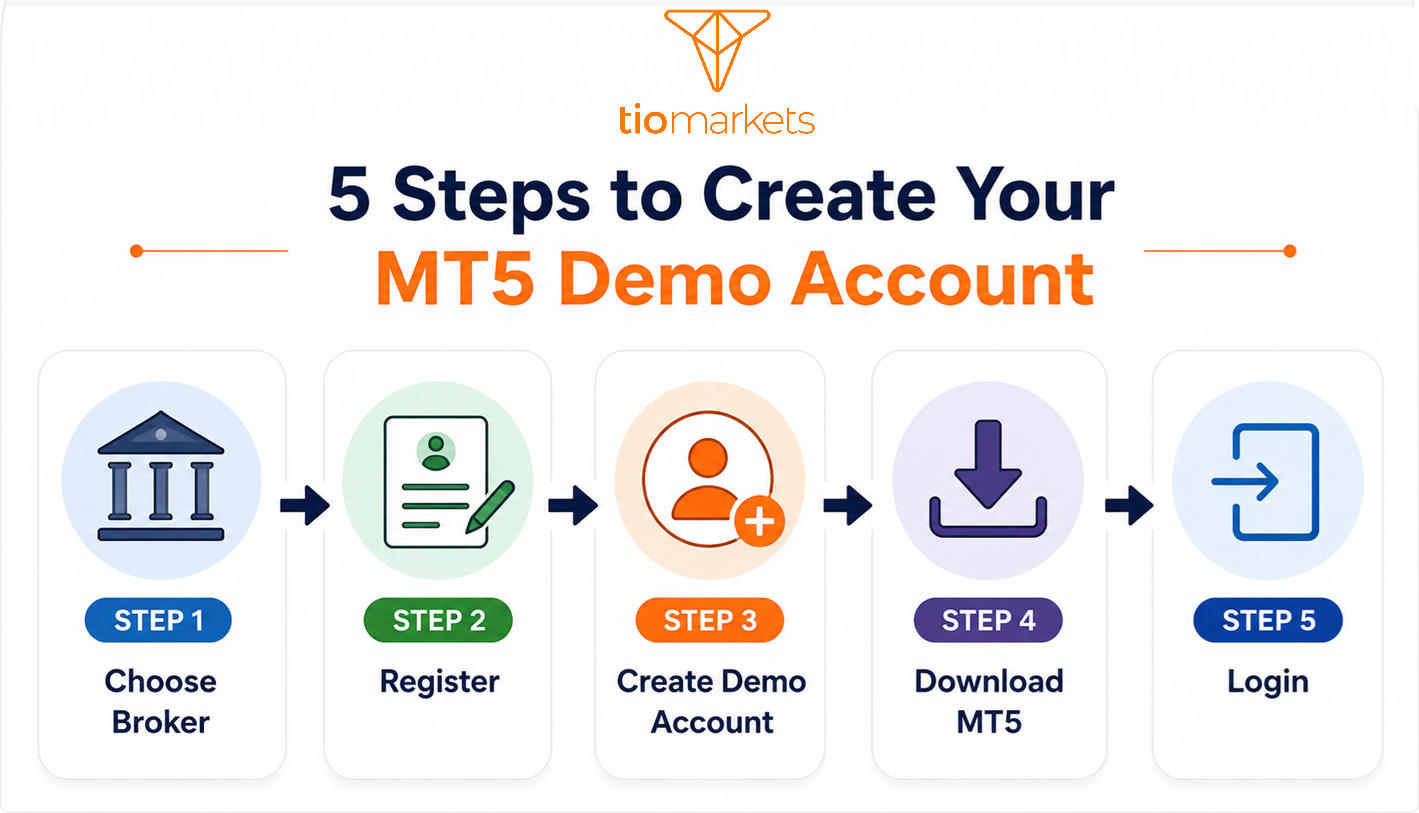
One of the most common mistakes new traders make is moving directly to live trading before they are genuinely prepared. MT5 offers a demo account feature that removes this risk entirely. For anyone studying how to trade MT5 for beginners, the demo account is not a shortcut or a compromise—it is the single most valuable resource available at the start of your trading journey.
What Is an MT5 Demo Account and How Does It Work?
An MT5 demo account is a fully functional simulated trading environment that mirrors live market conditions in real time. It is funded with virtual capital, which means you can place trades, test strategies, and explore every feature of the platform without any financial risk.
The prices you see on a demo account come from the same live market feeds used in real trading. The order execution, chart data, and analytical tools are identical to those on a live account. The only difference is that gains and losses exist only in the simulation—they do not affect real money.
How Do You Open an MT5 Demo Account?
Most brokers that support MT5 offer a demo account registration process directly on their website or within the MT5 platform itself. The process typically requires only a name and email address. Once registered, you receive login credentials that you enter into the MT5 platform to access your demo environment.
Some brokers allow demo accounts to remain active indefinitely, while others apply a time limit. Checking the terms of your specific broker’s demo offering before you begin ensures you have enough time to practice properly.
What Should You Practice on an MT5 Demo Account?
A demo account is most valuable when you use it with the same seriousness you would bring to a live account. This means practicing specific skills rather than trading randomly. Start by familiarizing yourself with the platform layout—how to open charts, add indicators, place different order types, and monitor positions in the Terminal window.
Once comfortable with navigation, begin practicing your analysis process. Identify support and resistance levels, apply your chosen indicators, and practice waiting for setups that match defined criteria before entering a trade. Practicing patience is just as important as practicing execution.
How Long Should You Trade on a Demo Account Before Going Live?
There is no universal timeline for transitioning from demo to live trading on MT5. The more relevant question is whether your trading process is consistent and whether you have achieved a period of stable, positive results on the demo account.
Traders who switch to live accounts purely because they feel bored of the demo, or after only a few days of practice, almost always encounter significant difficulties. Emotional discipline, which is the ability to follow your trading rules under real financial pressure, develops gradually. Spending adequate time on the demo account builds the process habits that make that discipline easier to maintain when real capital is at stake.
What Are the Limitations of an MT5 Demo Account?
A demo account does not fully replicate the psychological experience of trading with real money. The emotional response to seeing a live account balance decrease is fundamentally different from watching virtual capital fluctuate. Some traders find that their discipline and decision-making change noticeably when they transition to live trading.
Being aware of this limitation does not reduce the value of the demo account—it simply means that moving to a live account with a small initial balance rather than a large one is a sensible next step. This allows you to experience real trading conditions while limiting your financial exposure during the adjustment period.
The Demo Account Is Where Good Habits Begin
The work you do on your MT5 demo account directly determines the quality of your live trading from day one. Use it to learn the platform thoroughly, develop a testable strategy, and build the habit of following your trading rules consistently. Every hour of deliberate practice on the demo account is an investment in a more prepared and more resilient approach to live trading.